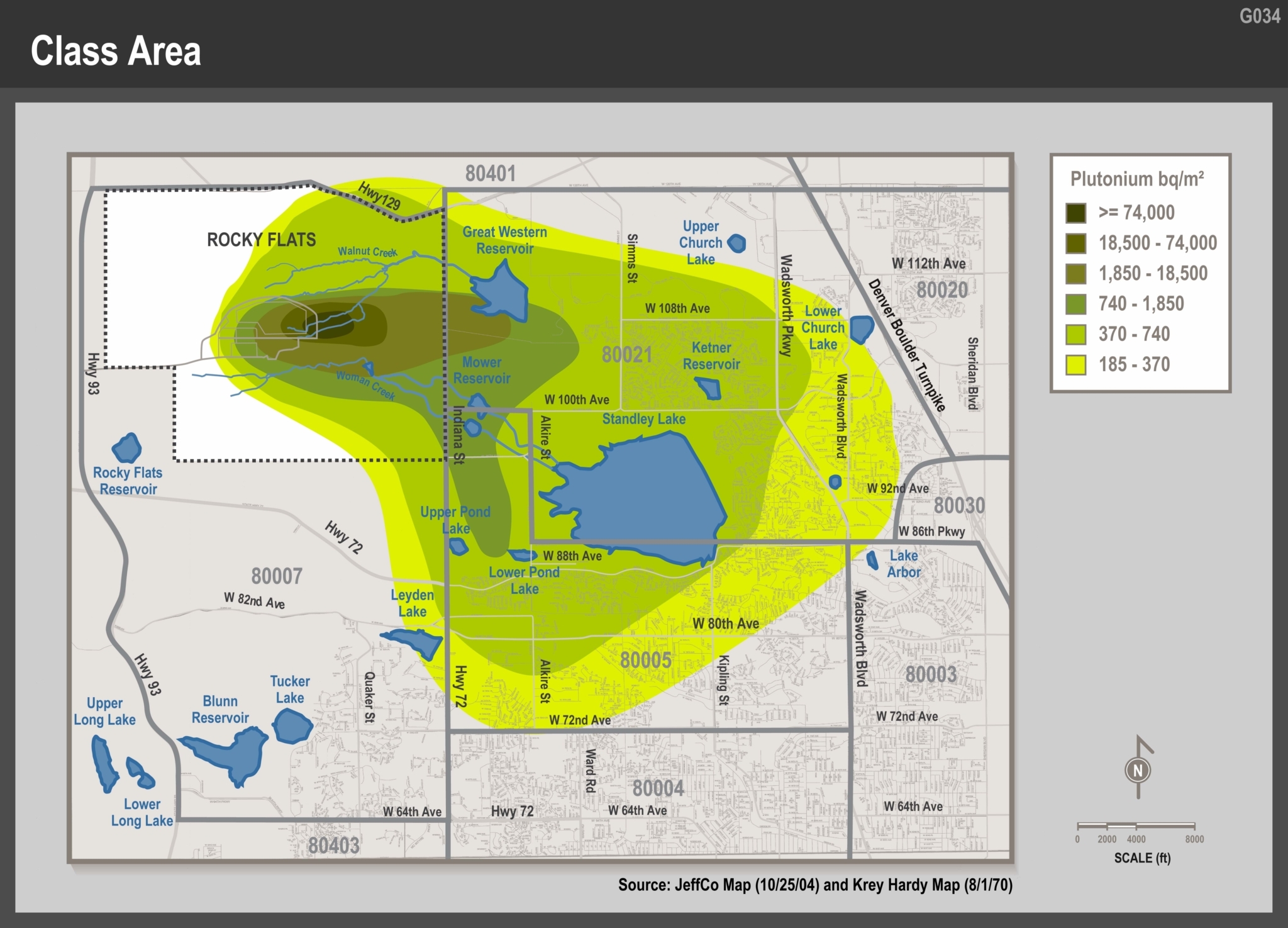
Rocky Flats lies northwest of Arvada between Denver and Boulder. It is not simply an old factory parcel inside Arvada: it was part of the U.S. nuclear-weapons complex, underwent a major cleanup, and is now divided into two differently managed federal areas. Understanding the present starts with understanding those boundaries.
1951–1989: manufacturing plutonium components
The Atomic Energy Commission acquired land in 1951, and production began in 1952. The central industrial area manufactured plutonium pits and other components, surrounded by a large security buffer. Glove-box fires in 1957 and 1969, together with material handling, storage, and waste practices, contributed to radioactive and chemical contamination.
The 1989 raid and the end of production
EPA and the FBI raided the plant in 1989, the same year it entered the Superfund National Priorities List. The operator later pleaded guilty to environmental crimes and paid a fine. As the Cold War ended, the production mission ceased and the site shifted to stabilization, demolition, and environmental remediation.
What did cleanup accomplish?
By 2005, hundreds of structures had been demolished and large volumes of low-level radioactive waste, contaminated soil, and water had been removed or treated. Regulatory closure followed in 2006. But “cleanup complete” does not mean the entire property became unrestricted residential land; remedy standards are tied to intended land use.
Today: two distinct areas
The roughly 1,300-acre former industrial core remains under the DOE Office of Legacy Management, is closed to the public, retains land-use controls, and receives continuing groundwater treatment, water monitoring, inspection, and maintenance. The surrounding 5,237 acres are managed by the U.S. Fish & Wildlife Service as Rocky Flats National Wildlife Refuge, where trails opened in 2018. These areas should not be conflated.
Official findings and continuing disagreement
EPA reports that the remedy controls unacceptable human-exposure pathways, while CDPHE continues oversight and publishes monitoring, historical-exposure, and cancer-study information. Some residents, physicians, and advocacy groups continue to question historical releases, sampling scope, wildfire dust, refuge access, and nearby development. A responsible account should neither describe every question as settled nor present an unproven risk as certain.